
Rope Harness
A rope harness is a pattern of rope wrapped around the torso, chest, or hips, tied primarily for decoration, sensation, or a sense of embrace rather than strict restraint. Harnesses range from simple hip and chest ties to intricate diamond patterns, and are a popular entry point into rope bondage because many designs can be worn comfortably while remaining mobile.
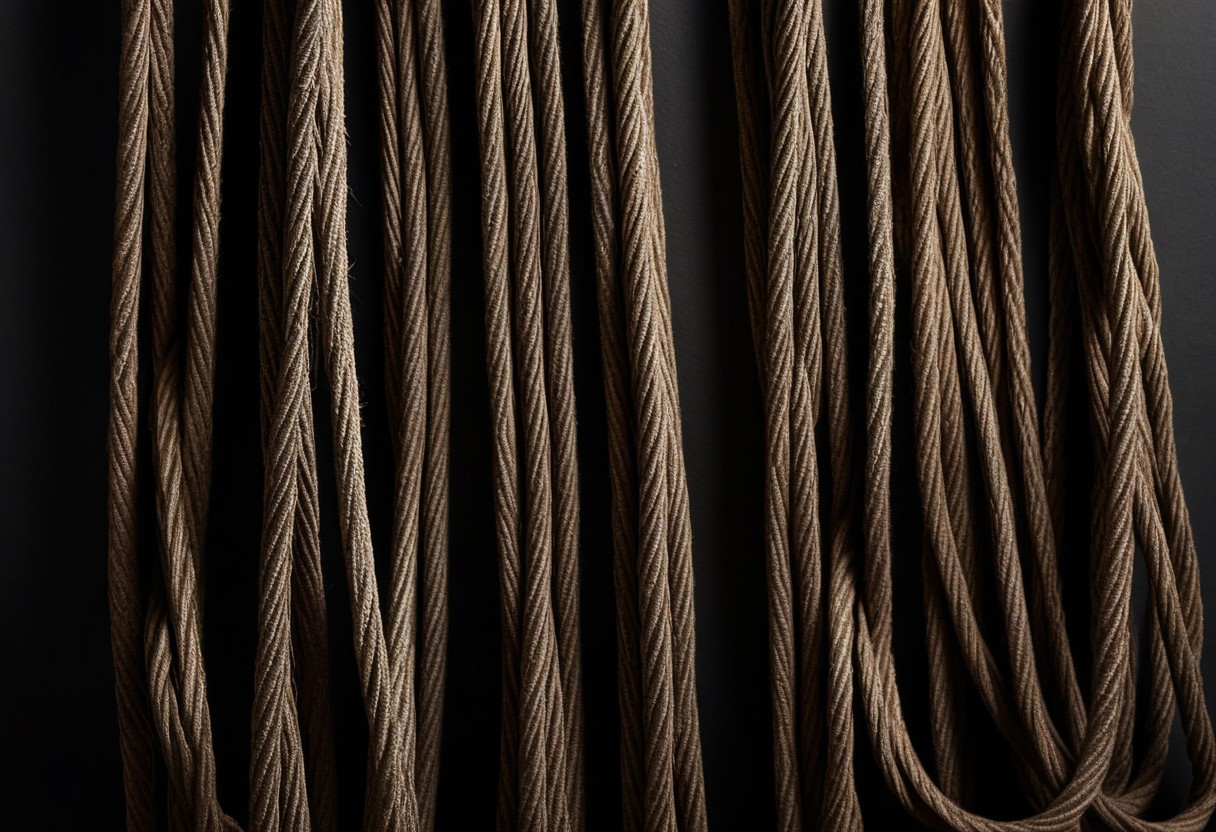
What it is
A rope harness is a decorative or sensory rope structure applied to the body — most often the chest, torso, or hips. Unlike restraint-focused ties, a harness usually does not immobilize a person; instead it frames the body, creates gentle pressure, and offers aesthetic and sensory pleasure. Many harnesses can be worn under or over clothing and allow the wearer to move around.
The term is broad. It covers Western-style improvised patterns as well as traditional Japanese forms such as the karada, a diamond-patterned body harness. Some harnesses are purely ornamental; others act as a foundation that a more advanced practitioner might later build upon for supportive or suspension work.
Common forms
Harnesses are named loosely and vary by region, teacher, and purpose. A few widely recognized categories:
- Chest harness — rope framing the ribcage and shoulders, often used decoratively or as a base for other ties.
- Karada — a Japanese-influenced diamond-pattern harness running down the torso.
- Hip harness — rope around the pelvis and thighs, worn for aesthetics or sensation.
- Full-body harness — combining chest, waist, and hip elements into one continuous piece.
- Load-bearing harnesses (such as certain chest ties) — engineered to support weight and considered advanced, suspension-adjacent work.
Consent & safety
Even non-restraining harnesses carry real risks, chiefly nerve compression and circulation issues. Rope crossing the wrong areas — the outer upper arm, the sides of the neck, or the front of the hip — can pinch nerves and cause numbness, tingling, or lasting injury. These effects can appear without pain, so ongoing communication matters more than how the tie feels in the moment.
Negotiate before you begin: discuss health conditions, prior injuries, mobility, and how tight is comfortable. Keep safety shears within reach to cut someone free quickly, and agree on a safeword or the traffic-light system. Aftercare and a post-scene check-in help catch delayed soreness or emotional drop.
- Never place rope across the front of the throat, and be cautious near major nerve pathways.
- Check in regularly; ask the bottom to report numbness, tingling, or coldness immediately.
- Keep safety shears accessible and know how to use them.
- Avoid leaving anyone in a harness unattended, especially if it bears weight.
- Load-bearing and suspension work is advanced and learned hands-on from experienced practitioners.
Exploring it responsibly
Rope harnesses are a welcoming starting point because many designs are decorative and low-mobility-impact, letting new tops and bottoms build skill without the added risk of full restraint or suspension. Learn from reputable in-person classes, rope jams, and vetted instructors rather than photos alone, since a harness that looks correct can still be tied unsafely.
Progress gradually. Master a couple of simple, well-understood patterns and learn to identify nerve and circulation warning signs before attempting anything load-bearing. Treat every session as a collaboration between rope top and rope bottom, with both people empowered to pause or stop.
Frequently asked questions
Is a rope harness the same as restraint?
Not usually. Most harnesses are decorative or sensory and allow movement, though some designs can be adapted to restrain or to support weight, which raises the risk level considerably.
Can a rope harness be worn all day?
Short comfortable wear is common, but prolonged wear increases the risk of nerve compression and circulation problems. Check in often, watch for numbness, and remove it if anything feels wrong.
What rope is best for a harness?
Beginners often choose natural fibers like jute or hemp, or a soft cotton, in a manageable length. The right choice depends on comfort, grip, and skin sensitivity — try options and prioritize body-safe materials.
Do I need training to tie a harness?
You can learn basic decorative harnesses from reputable classes and vetted resources, but hands-on instruction is strongly recommended, and any load-bearing or suspension harness requires advanced, in-person training.
Make an image of Rope Harness
Describe the scene, we turn it into a photoreal image. Yours to keep, post, or share.
Curious how Rope Harness fits you?
Take the free Kink Test — scored across 35 archetypes with an inclusive, consent-first lens. No login, no email. Just answer honestly and see where you land.
18+ only. Private by default.
Explore Rope Harness with people who get it.
SafeHaven is a private, consent-first kink & BDSM social network. Founding members get free lifetime membership — before paid tiers ever land. Come as you are, stay forever.
100 founding seats — free lifetime membership
18+ only. No passwords, ever.