
Flogger
A flogger is an impact toy consisting of multiple soft-to-firm tails (falls) attached to a handle, swung to strike the body. Depending on the material, weight, and technique, it can deliver sensations ranging from a deep, warming thud to a sharp sting, making it one of the most versatile and beginner-friendly impact implements.
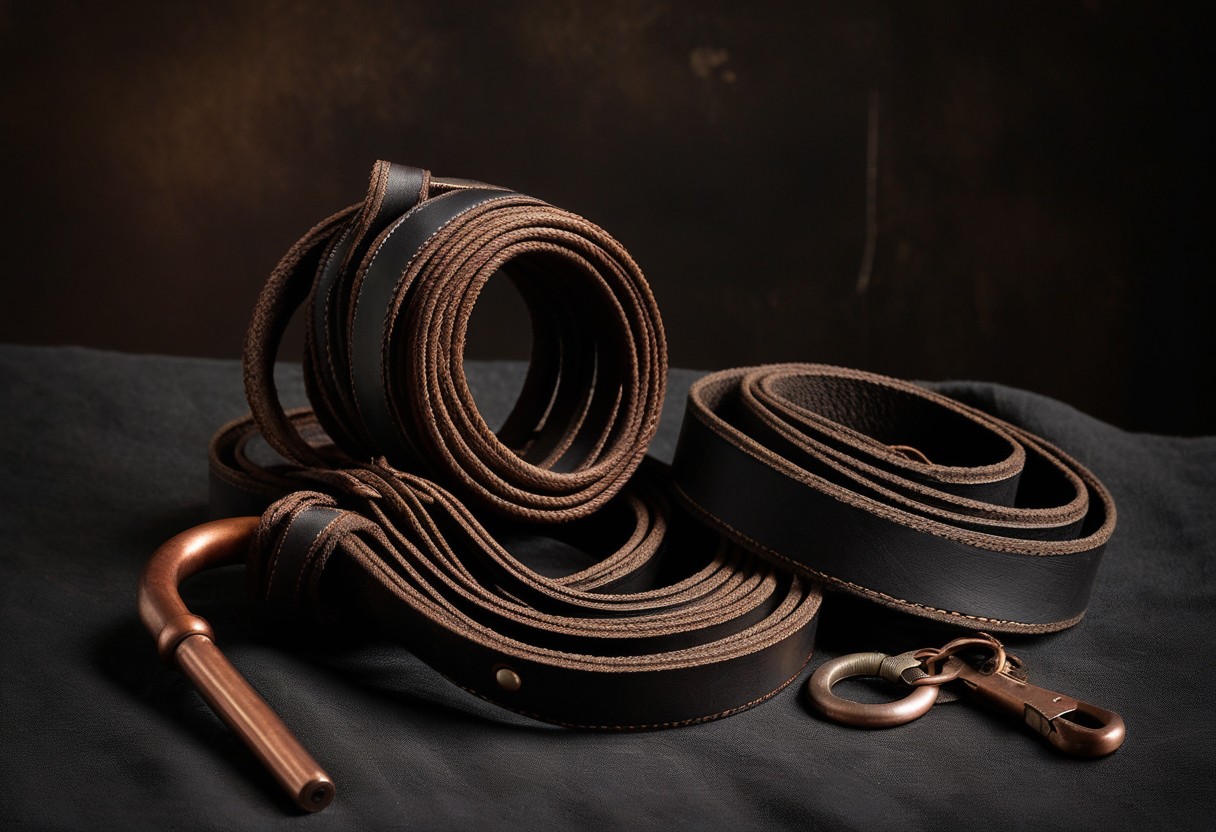
What it is
A flogger is a handheld impact tool with many tails bound to a single handle. The tails may be made of leather, suede, rubber, faux materials, rope, or synthetic fibers, and the way they land determines the sensation. Because the striking force spreads across multiple falls rather than a single edge, floggers are often considered more forgiving and adaptable than single-tail whips or canes.
Floggers occupy a broad range on the sensation spectrum. Heavy, soft, wide falls tend to produce a 'thuddy' impact felt deep in the muscle, while thin, stiff, or knotted falls create a sharper, more stinging surface sensation. This flexibility is why many people begin their impact-play journey with a flogger.
Common forms
Floggers vary widely in material, tail count, length, and weight, and each variable shifts the experience. Trying different types helps players discover what they and their partners enjoy.
- Leather floggers — a common all-rounder; supple leather leans thuddy, stiffer leather adds sting.
- Suede floggers — softer landing, often used for sensual or warm-up play.
- Rubber or silicone floggers — heavier, stingy, and easy to clean.
- Rope or paracord floggers — lightweight with a distinctive bite.
- Faux-leather and vegan options — accessible, affordable, and cruelty-free.
- Deerskin or 'floggers with fine falls' — very soft, thuddy sensation prized by many.
Consent & safety
Flogging is generally considered standard-risk, but it still requires clear negotiation, communication, and attention to the body. The safest target areas are well-padded regions like the upper back, shoulders, buttocks, and thighs. Areas to avoid include the kidneys (lower back flanks), spine, tailbone, neck, and joints, as strikes there can cause injury.
Discuss desired intensity, sensation preferences, and limits beforehand, and agree on a safeword or a traffic-light check-in system. Impact can leave marks or bruising and may bring up strong emotional responses, so plan for aftercare. A wrapping tail that curls around the body can catch bony or sensitive areas unexpectedly.
- Negotiate limits, intensity, and safewords before starting.
- Aim for muscled areas; avoid kidneys, spine, neck, and joints.
- Start light and build up gradually to gauge response and warm the skin.
- Watch for skin breaks; keep floggers clean and sanitize between partners.
- Check in verbally and watch body language throughout.
- Plan aftercare for both bottom and top, including possible subdrop or topdrop.
Exploring it responsibly
Beginners benefit from learning aim, rhythm, and follow-through slowly, often practicing on a pillow or cushion before playing on a person. Watching experienced demonstrations at a class, munch, or play party and reading reputable resources builds skill and confidence.
Flogging can be intensely physical and emotional. Approach it with curiosity, honesty about experience level, and a willingness to stop or adjust at any time. Skill develops through practice, feedback, and ongoing communication — not by pushing intensity quickly.
Frequently asked questions
Is a flogger good for beginners?
Yes. Because the impact spreads across many tails, floggers are among the more forgiving impact toys, and their sensation range lets people start gentle and build up gradually.
What's the difference between a thuddy and a stingy flogger?
Heavier, softer, wider tails produce a deep 'thud' felt in the muscle, while thinner, stiffer, or knotted tails create a sharper 'sting' on the skin's surface. Material and weight largely determine which you get.
Where should I avoid striking with a flogger?
Avoid the kidneys (lower-back flanks), spine, tailbone, neck, and joints. Focus on well-padded muscle groups like the upper back, buttocks, and thighs.
How do I clean a flogger?
Cleaning depends on material: rubber and silicone can be washed and disinfected easily, while leather and suede need gentle, material-appropriate care. Sanitize between partners, especially if skin is broken.
Make an image of Flogger
Describe the scene, we turn it into a photoreal image. Yours to keep, post, or share.
Curious how Flogger fits you?
Take the free Kink Test — scored across 35 archetypes with an inclusive, consent-first lens. No login, no email. Just answer honestly and see where you land.
18+ only. Private by default.
Explore Flogger with people who get it.
SafeHaven is a private, consent-first kink & BDSM social network. Founding members get free lifetime membership — before paid tiers ever land. Come as you are, stay forever.
100 founding seats — free lifetime membership
18+ only. No passwords, ever.