
Paddle
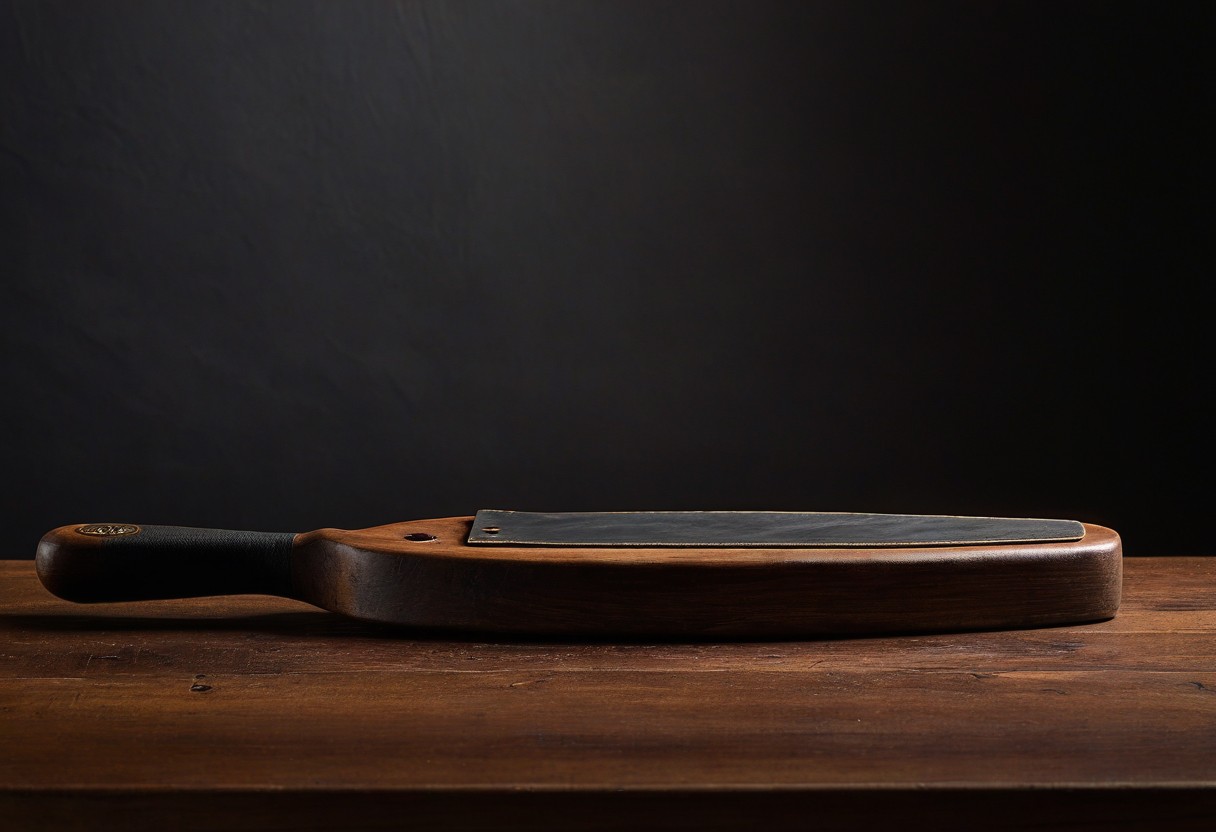
A paddle is a flat, rigid impact implement—commonly made of wood, leather, silicone, or acrylic—used to strike fleshy areas of the body such as the buttocks. It delivers a broad, often 'thuddy' sensation and is a popular, approachable tool in impact play because its large surface distributes force and is comparatively easy to aim.
What it is
A paddle is a handheld striking tool with a flat, solid face and a handle. Because its impact surface is broad, it spreads force over a wider area than narrow implements like canes or single-tails, producing a fuller, deeper 'thud' rather than a sharp sting—though shape, material, and force all change the sensation dramatically.
Paddles sit within the broader category of impact play. Many people find them a beginner-friendly entry point: they are predictable, relatively easy to aim at safe target areas, and available in a wide range of intensities from gentle to very heavy.
Common forms
Paddles vary widely in material and design, and each combination produces a distinct feel. Heavier, denser materials tend toward thud; thinner or more flexible ones add sting or speed.
- Wood or acrylic — rigid and dense, delivering firm, thuddy impact
- Leather — often layered, giving a softer, warmer sensation
- Silicone or rubber — flexible with a sharper bite
- Textured faces — studs, holes, or fur that alter sensation and warm-up
- Novelty or hairbrush-style paddles — smaller surfaces used for spanking-style scenes
Consent & safety
Paddling is standard-risk but not risk-free. The safest targets are well-padded areas—primarily the buttocks and, with care, the upper thighs. Avoid the lower back and kidneys, spine, tailbone, joints, and any bony region, as impact there can cause real injury.
Negotiate before you begin: discuss intensity, target areas, marks, health conditions, and a clear safeword or signal. Warm up gradually, start light, and build intensity as the receiver's body responds. Check in regularly and watch for changes in skin, breathing, and responsiveness.
- Agree on a safeword or the traffic-light system before starting
- Warm up slowly; never open a scene at full force
- Keep strikes on padded areas and away from the spine, kidneys, and joints
- Bruising is common; broken skin, numbness, or sharp pain means stop
- Sanitize porous vs. non-porous paddles appropriately between partners
Exploring it responsibly
If you're new, start with a single moderate paddle and a partner you trust, and prioritize communication over intensity. Reading reputable resources, attending demos, and learning from experienced practitioners will build your aim and confidence faster than experimenting blindly.
Aftercare matters. Impact play can produce strong emotional and physical responses for both giver and receiver, and a comedown period afterward is normal. Plan for reassurance, rest, hydration, and time to reconnect once the scene ends.
Frequently asked questions
Is a paddle good for beginners?
Yes—many people consider paddles among the most approachable impact tools because their broad surface is easy to aim and distributes force. Start light, warm up, and keep strikes on well-padded areas.
What's the difference between a paddle and a flogger?
A paddle is a single rigid surface delivering broad, thuddy impact, while a flogger has many falls that spread across the skin. Paddles are generally more focused and easier to aim; floggers offer a more varied, wrap-prone sensation.
Where should you never use a paddle?
Avoid the lower back and kidneys, spine, tailbone, hips and other bony areas, and joints. Stick to fleshy, padded regions like the buttocks to reduce injury risk.
Is bruising normal after paddling?
Light to moderate bruising is common and expected by many players. However, broken skin, lasting numbness, sharp or radiating pain, or bruising far beyond what was negotiated are signs to stop and reassess.
Make an image of Paddle
Describe the scene, we turn it into a photoreal image. Yours to keep, post, or share.
Curious how Paddle fits you?
Take the free Kink Test — scored across 35 archetypes with an inclusive, consent-first lens. No login, no email. Just answer honestly and see where you land.
18+ only. Private by default.
Explore Paddle with people who get it.
SafeHaven is a private, consent-first kink & BDSM social network. Founding members get free lifetime membership — before paid tiers ever land. Come as you are, stay forever.
100 founding seats — free lifetime membership
18+ only. No passwords, ever.