
Flogging
Flogging is a form of impact play in which one partner strikes another with a flogger—a handled implement with multiple tails or 'falls'—to produce a wide range of sensations, from a deep, warming thud to a bright sting. It's popular because floggers are versatile, relatively forgiving for beginners, and can create both meditative and intense experiences when used with skill, negotiation, and care.
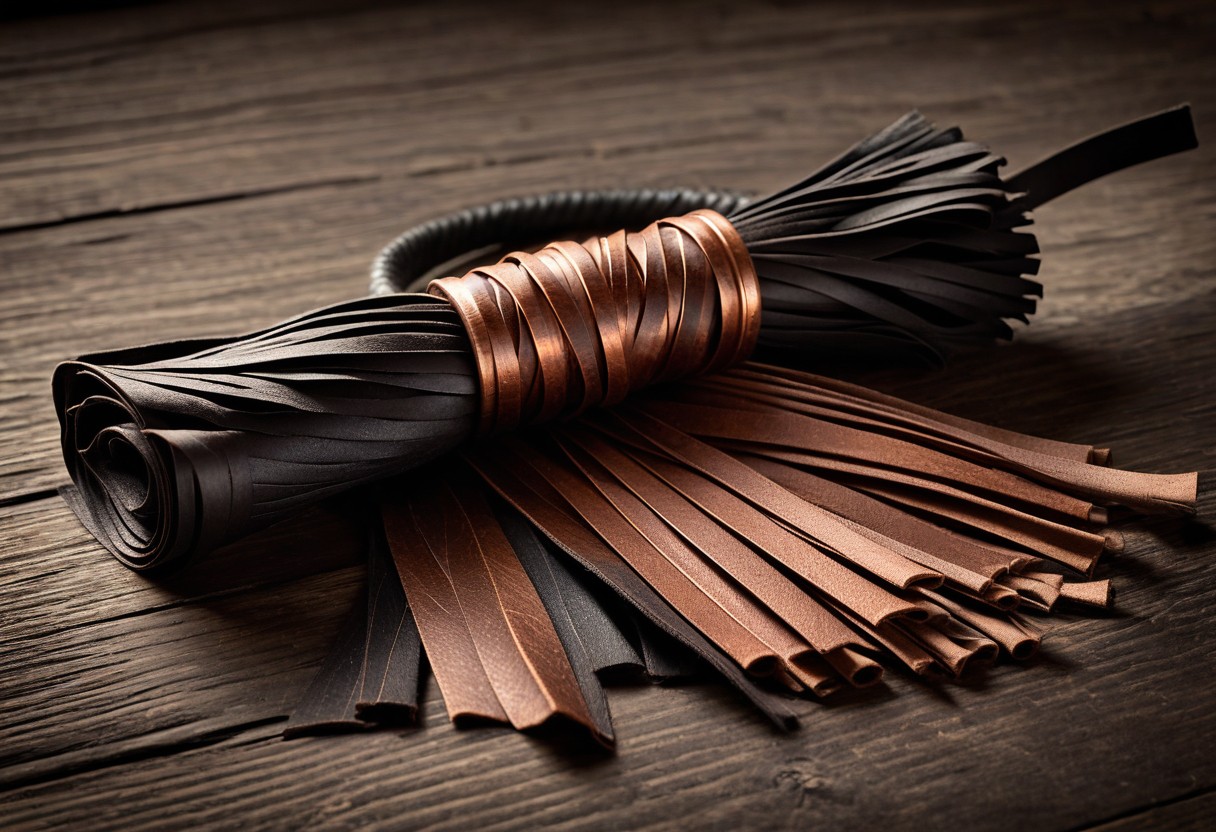
What it is
Flogging uses a flogger: a handle attached to several tails made of leather, suede, rubber, fabric, or synthetic materials. The rhythmic swing of the tails against the body creates sensation that can be soothing and trance-like or sharp and challenging, depending on the tool, the target area, and the technique.
Many people find flogging appealing because a single implement can span a broad sensory range. Heavier, wider falls tend to spread force and produce a rounded 'thud,' while thinner or stiffer falls concentrate impact into a stinging bite. Skilled tops often layer these sensations across a scene to build intensity gradually.
Common forms
Floggers vary widely, and the material and construction dramatically change the experience. Playstyles range from slow, sensual warm-ups to firmer, cathartic sessions.
- Thuddy floggers: heavy leather or soft falls that deliver deep, muscular impact.
- Stingy floggers: thin, stiff, or braided tails that concentrate sharp surface sensation.
- Sensual flogging: light, flowing strokes used for relaxation, sensory play, or building anticipation.
- Rhythmic 'Florentine' flogging: swinging two floggers in a continuous figure-eight pattern (an advanced skill).
- Materials matter: suede and soft leather are gentler; rubber and hard leather hit harder.
Consent & safety
Flogging is standard-risk when aimed at safe target areas, but poor aim can cause serious harm. Negotiate beforehand—desired intensity, limits, health conditions, medications that affect bruising, and a clear safeword or signal. Keep checking in throughout.
Aim for well-padded areas like the upper back, buttocks, and thighs. Avoid the spine, kidneys, neck, tailbone, joints, and any bony or organ-rich region. Wrapping—where tails curl around the body's side—can bruise or injure and is a common beginner error.
- Learn safe target zones and avoid vulnerable areas entirely.
- Start light and build slowly; warm-up reduces shock and injury risk.
- Agree on a safeword or the traffic-light system before starting.
- Watch for skin breaks, numbness, or bruising in unexpected places.
- Plan aftercare—flogging can trigger emotional release and subdrop.
- Sanitize floggers between partners; leather can harbor bacteria if skin breaks.
Exploring it responsibly
Beginners benefit from learning in person—watching demonstrations, attending workshops, or practicing on cushions or pillows to develop accurate, controlled aim before working on a person. Reputable in-person educators and community classes are excellent resources.
Discuss aftercare in advance: many bottoms want warmth, hydration, and connection afterward, while tops can also experience an emotional dip. Ongoing communication, mutual respect, and pacing turn flogging into a satisfying, sustainable practice rather than a risky improvisation.
Frequently asked questions
Is flogging safe for beginners?
Flogging is one of the more approachable impact activities, but it still requires knowing safe target zones, starting light, and practicing aim. Learning from experienced practitioners or workshops greatly reduces risk.
What's the difference between thud and sting?
Thud is a deep, spread-out impact from heavier, softer tails, while sting is a sharp, surface-level sensation from thinner or stiffer falls. Most floggers lean one way, and technique can shift the balance.
Where should you never aim a flogger?
Avoid the spine, kidneys, neck, tailbone, joints, and bony areas. Stick to well-muscled regions like the upper back, buttocks, and thighs, and watch for tails wrapping around the sides.
Do I need aftercare after flogging?
Aftercare is strongly recommended. Flogging can prompt intense physical and emotional responses, and both the person receiving and giving may benefit from rest, hydration, warmth, and reconnection.
Make an image of Flogging
Describe the scene, we turn it into a photoreal image. Yours to keep, post, or share.
Curious how Flogging fits you?
Take the free Kink Test — scored across 35 archetypes with an inclusive, consent-first lens. No login, no email. Just answer honestly and see where you land.
18+ only. Private by default.
Explore Flogging with people who get it.
SafeHaven is a private, consent-first kink & BDSM social network. Founding members get free lifetime membership — before paid tiers ever land. Come as you are, stay forever.
100 founding seats — free lifetime membership
18+ only. No passwords, ever.