
Single-Tail Whip
A single-tail whip is an advanced impact implement with one long, tapering tail that delivers a sharp, precise, concentrated sensation — often a distinctive sting or 'crack' — to a small area of the body. Because it can reach high speeds and cause injury if misdirected, it is considered edge play that demands significant skill, dedicated practice, and hands-on learning before use on a partner.
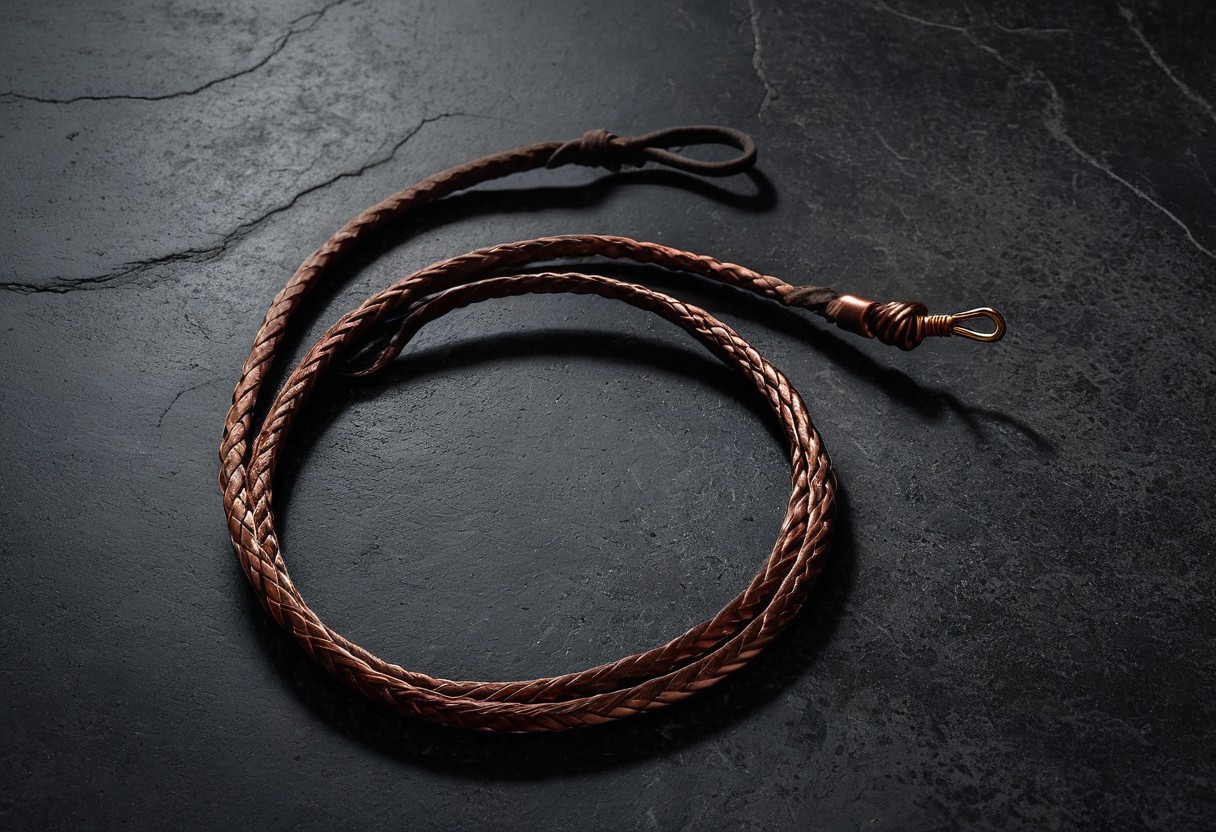
What it is
A single-tail whip is a flexible whip made of a single long tail (commonly leather, though also paracord, nylon, or kangaroo hide) that narrows from a thicker handle end to a fine tip. When swung skillfully, the tail's motion accelerates toward the tip, producing a focused, biting sensation very different from the broad, thuddy feel of a flogger or paddle.
Single-tails include bullwhips, snake whips, signal whips, and shorter 'quirt'-style tails, among others. Their appeal lies in precision and intensity: an experienced top can target a small area with a sharp, stinging sensation, and the visual and auditory drama of a whip in motion is part of the experience for many people.
Common forms
Whips vary widely in length, weight, taper, and material, and each behaves differently. Beginners to the tool often start with shorter, more controllable designs before considering longer whips, which carry a wider margin for error.
- Bullwhip — a long whip with a handle and thong; capable of a loud 'crack' when the tip breaks the sound barrier.
- Snake whip — no rigid handle; flexible along its whole length, often shorter and easier to store.
- Signal whip — a shorter single-piece design valued for close-range precision.
- Short tails / quirts — compact options with a smaller reach and generally lower speed.
Consent & safety
Single-tail play is an edge practice: it carries real risk of injury and should only be undertaken by people who have developed accuracy and control through dedicated practice. A misplaced strike can break skin, cause deep bruising, or damage sensitive structures. This entry describes the tool and its risks; it is not a how-to. Actual skill is learned hands-on from experienced practitioners, reputable in-person workshops, and target practice away from human bodies.
Anatomy matters enormously. The upper back, kidneys, spine, tailbone, neck, face, joints, and genitals are areas practitioners treat with great caution or avoid entirely. Thorough negotiation, a clear safeword or traffic-light system, and attentive aftercare are essential parts of any scene.
- Build accuracy on inanimate targets long before aiming at a partner.
- Negotiate limits, health conditions, and target zones in advance.
- Keep a first-aid kit accessible and know how to respond to broken skin.
- Avoid high-risk areas and account for the whip's full reach and follow-through.
- Watch for signs of subdrop or topdrop and plan aftercare for both partners.
Exploring it responsibly
Many people begin their journey by attending demonstrations at kink conventions or clubs, taking classes from reputable educators, and practicing tip accuracy solo before ever involving a partner. Watching a skilled top and asking questions builds a realistic sense of the discipline and time involved.
If you are a bottom curious about receiving single-tail, vetting your top's experience is part of informed consent — ask how they trained, what safety practices they use, and how they handle mistakes. Approached with patience, honesty, and a risk-aware mindset, single-tail can be a deeply engaging form of sensation play; approached casually, it is dangerous.
Frequently asked questions
Is a single-tail whip safe for beginners?
Not as a first impact tool. Beginners typically start with floggers or paddles, which are far more forgiving, and only move to single-tails after developing accuracy through dedicated practice and instruction.
How is a single-tail different from a flogger?
A flogger has many tails and delivers a broad, often thuddy sensation across a wide area, while a single-tail concentrates energy into one tip for a sharp, precise sting that is harder to control.
Where should single-tails not be aimed?
High-risk areas such as the neck, face, spine, kidneys, tailbone, joints, and genitals are generally avoided. Practitioners target padded areas like the buttocks and, with skill, the mid-back away from the spine.
How do people learn to use a single-tail safely?
Through hands-on instruction from experienced practitioners, workshops at conventions or clubs, and extensive solo target practice on inanimate objects before ever using it on a human body.
Make an image of Single-Tail Whip
Describe the scene, we turn it into a photoreal image. Yours to keep, post, or share.
Curious how Single-Tail Whip fits you?
Take the free Kink Test — scored across 35 archetypes with an inclusive, consent-first lens. No login, no email. Just answer honestly and see where you land.
18+ only. Private by default.
Related terms
Explore Single-Tail Whip with people who get it.
SafeHaven is a private, consent-first kink & BDSM social network. Founding members get free lifetime membership — before paid tiers ever land. Come as you are, stay forever.
100 founding seats — free lifetime membership
18+ only. No passwords, ever.