Hogtie
A hogtie is a bondage position that connects the wrists and ankles behind the back, holding the bound person in a folded, prone-leaning posture. It is an intense, restrictive tie prized for its feeling of helplessness, but it carries real risks to breathing, circulation, and joints, and belongs to advanced, risk-aware rope practice.
What it is
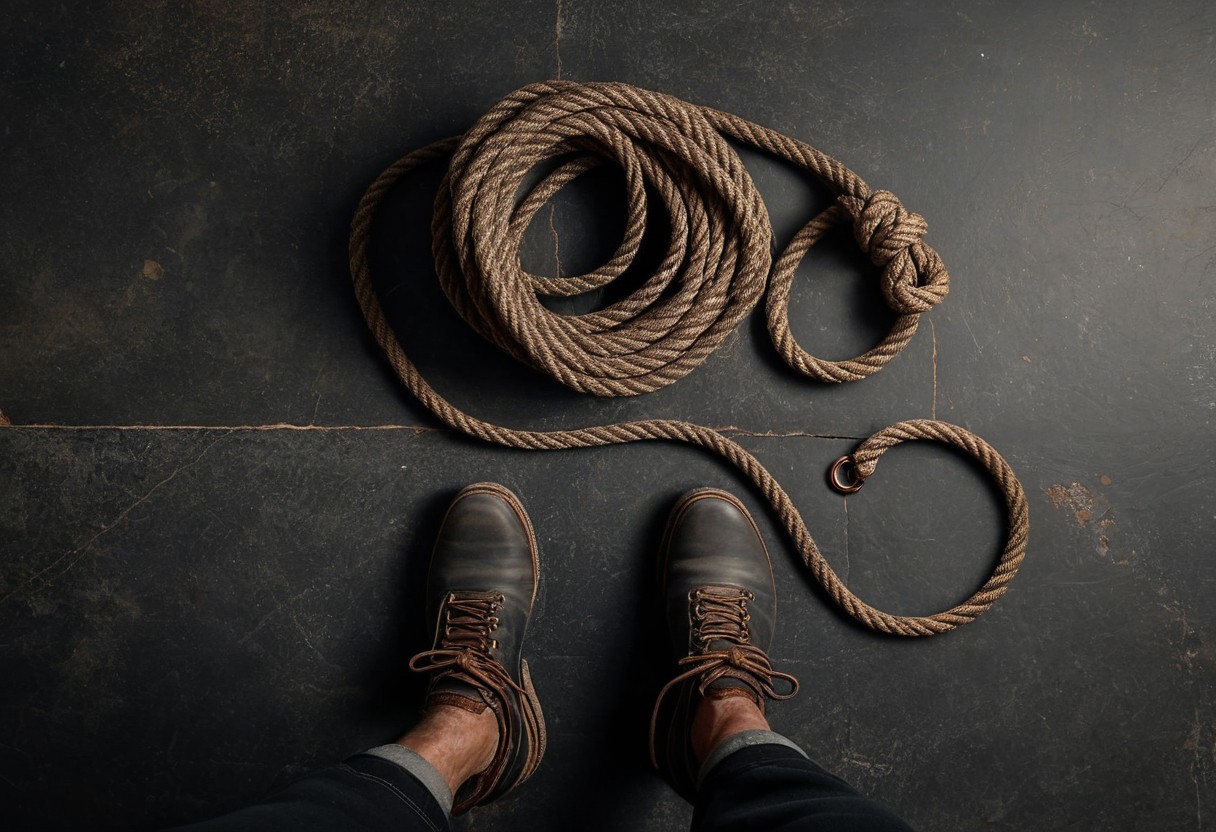
A hogtie binds the wrists and ankles together behind the body, drawing the limbs toward each other so the bound partner cannot easily move, stand, or use their hands. Depending on how it is arranged, the person may lie on their front, side, or in a partially arched position. The appeal is largely psychological: profound restriction, surrender, and reliance on the top.
Hogties can be made with rope, cuffs, straps, or other restraints. Because the position compresses the torso and loads the shoulders, hips, and knees, it is considered an edge practice rather than a beginner tie — small changes in angle or tightness meaningfully change the risk.
Common forms
There is no single 'correct' hogtie. Variations differ in how the limbs are connected, how much strain is placed on the body, and how mobile the bottom remains.
- Classic hogtie — wrists and ankles joined behind the back, often prone.
- Modified or 'loose' hogtie — a longer connection that reduces arch and joint strain, easing breathing.
- Cuff-based hogtie — using leather or metal restraints instead of rope for quicker release.
- Arched or predicament variants — advanced forms that deliberately create tension, appropriate only for experienced players who understand the added risk.
Consent & safety
A hogtie can restrict breathing because the chest and diaphragm are compressed, especially face-down; positional asphyxia is a genuine, potentially fatal risk. It can also strain the shoulders, cut off circulation, and pinch nerves. The bound person must never be left alone, must be able to communicate, and should be moved or released at the first sign of numbness, tingling, breathing difficulty, or distress.
These are skills learned hands-on from experienced practitioners, in-person classes, and reputable community resources — not from casual online clips. Negotiate limits, health conditions, and a safeword or nonverbal signal beforehand, and keep safety shears within reach.
- Never leave a hogtied person unattended, even briefly.
- Avoid strict face-down positions; protect the airway and watch breathing.
- Check for nerve signs (numbness, tingling, weakness) and circulation regularly.
- Keep a fast-release plan and cutting tool on hand at all times.
- Screen for shoulder, back, hip, and respiratory issues in advance.
- Agree on a safeword or clear nonverbal signal before starting.
Exploring it responsibly
Beginners are best served by building rope and restraint fundamentals first — comfort with basic ties, reading a partner's body, and understanding nerve and circulation warning signs — before attempting anything as demanding as a hogtie. Start conservative: shorter durations, looser connections, and positions that keep breathing easy. Aftercare matters too, since intense restriction can produce strong emotional and physical responses for both partners.
Rope jams, classes, and mentorship within kink communities are excellent ways to learn safely and to have someone knowledgeable review your technique before you rely on it.
Frequently asked questions
Is a hogtie safe for beginners?
It is generally considered an advanced position because of breathing and joint risks. Newcomers should build rope fundamentals and learn from experienced practitioners before attempting it, and should start with looser, easier variants.
Why is breathing a concern in a hogtie?
The position can compress the chest and diaphragm, particularly when lying face-down, which can restrict breathing. This is why the bound person is never left alone and airway and breathing are monitored throughout.
How long can someone stay in a hogtie?
There is no fixed safe duration; comfort and circulation dictate it. Many practitioners keep sessions short and release or reposition at the first sign of numbness, breathing difficulty, or distress.
What should I have ready before doing a hogtie?
Negotiated limits and a safeword or nonverbal signal, safety shears within reach, awareness of any health conditions, and a plan to release quickly. Never attempt one without a way to communicate and free the person fast.
Make an image of Hogtie
Describe the scene, we turn it into a photoreal image. Yours to keep, post, or share.
Curious how Hogtie fits you?
Take the free Kink Test — scored across 35 archetypes with an inclusive, consent-first lens. No login, no email. Just answer honestly and see where you land.
18+ only. Private by default.
Explore Hogtie with people who get it.
SafeHaven is a private, consent-first kink & BDSM social network. Founding members get free lifetime membership — before paid tiers ever land. Come as you are, stay forever.
100 founding seats — free lifetime membership
18+ only. No passwords, ever.