
Knife Play
Also called edge play.
Knife play is an advanced form of edge play that uses a blade's sensation, sound, temperature, and psychological weight against the skin — usually without cutting. It relies on precise control, careful negotiation, and deep trust, and it carries real physical and psychological risk that makes hands-on learning from experienced practitioners essential.
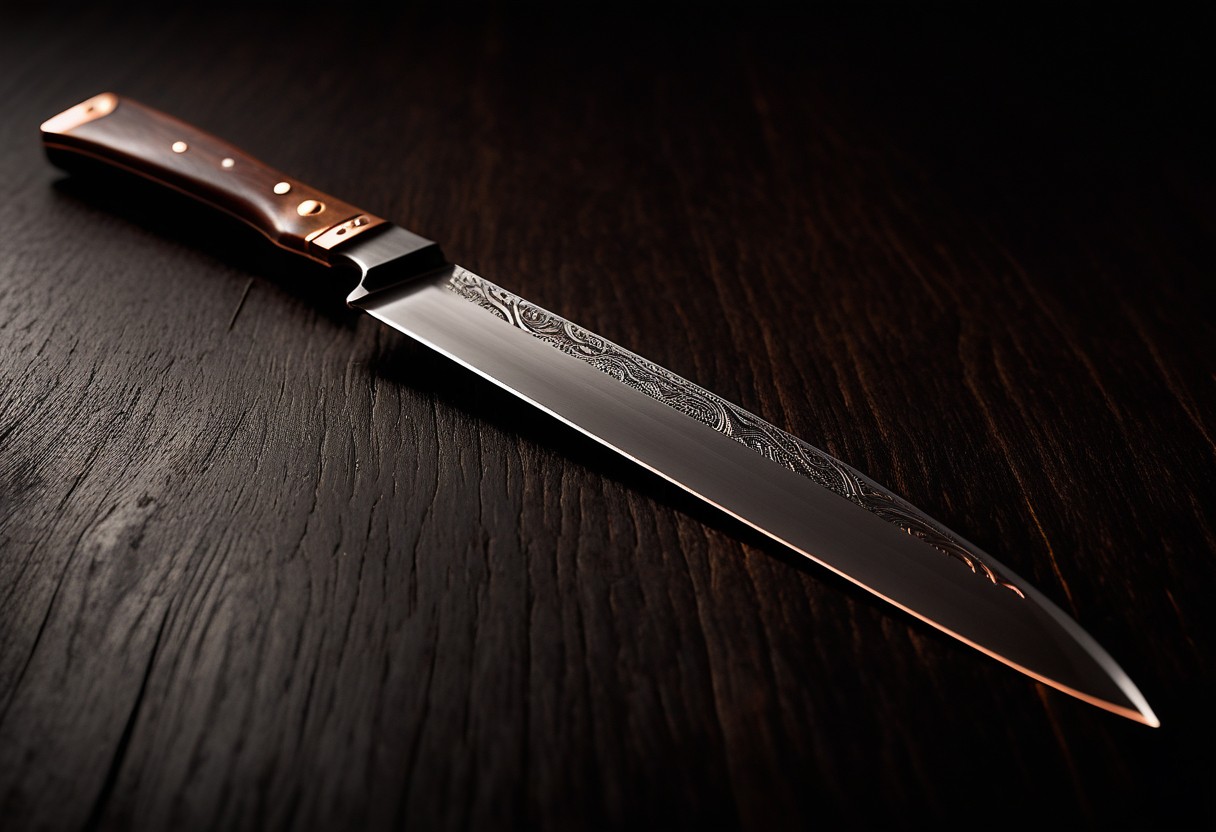
What it is
Knife play is a sensation and psychological practice in which a knife or blade-like object is used against the body for its edge, coolness, dragging pressure, and the intense mental charge that a weapon can evoke. In most knife play the intent is not to cut: the erotic and emotional impact comes largely from anticipation, fear, focus, and the trust required to let someone hold a blade near vulnerable skin.
It sits within edge play — a category of practices that carry heightened physical or emotional risk and demand extra preparation. For many people the appeal is precisely the psychological intensity: the vulnerability of being at a partner's mercy, the sharpened presence and adrenaline, and the profound trust exchanged in a scene.
Common forms
Knife play spans a wide range of intensity, from purely sensory to heavily psychological. Where any breaking of skin is involved, it overlaps with blood play and carries far greater risk.
- Sensation play: dragging a flat or dull edge, the cool of steel, or the point traced lightly across the skin (no cutting).
- Psychological or fear play: the presence, sound, and threat of a blade used to build tension and vulnerability.
- Temperature elements: chilled or slightly warmed blades combined with other sensations.
- Roleplay scenes: interrogation, primal, or predator/prey dynamics that incorporate a knife as a prop.
- Edge-of-blood practices, which enter blood-play and scarification territory and require substantially more skill and hygiene knowledge.
Consent & safety
Knife play is genuinely risky and is learned hands-on from experienced practitioners, workshops, and reputable in-person resources — not from written descriptions. This entry explains what it is and what to consider, not how to do it. Thorough negotiation, sober play, and attentive aftercare are non-negotiable, and both people should understand and accept the risk profile before beginning.
Key risks include accidental cuts, infection, nerve or vessel injury, and strong emotional or trauma responses. A clear safeword or signal, plus first-aid readiness, should be in place.
- Negotiate limits, triggers, and the intended intensity in advance; agree on a safeword and non-verbal signals.
- Avoid vulnerable areas such as the throat, wrists, and major vessels; understand basic anatomy.
- Follow strict hygiene: clean, well-maintained tools and awareness of any skin-breaking risk.
- Keep first-aid supplies accessible and know when to stop and seek medical care.
- Watch for emotional intensity and dissociation; check in during and after the scene.
- Never play impaired; adrenaline and blades are an unforgiving combination.
Exploring it responsibly
If knife play interests you, start with education rather than action. Attend demonstrations at reputable events, learn from mentors, and consider building comfort with lower-risk sensation and psychological play first. Frameworks like RACK and PRICK emphasize informed, risk-aware consent — especially vital for edge practices.
Trust and communication matter more here than technique. Vet partners carefully, discuss emotional history and triggers, and treat the psychological weight of a weapon with the seriousness it deserves. Aftercare and follow-up check-ins help both partners process an intense experience.
Frequently asked questions
Does knife play always involve cutting?
No. Most knife play focuses on sensation and psychological intensity without breaking the skin. Practices that involve cutting overlap with blood play and scarification and carry considerably higher risk.
Is knife play safe for beginners?
It's classified as edge play and is not a beginner activity. People new to it should build experience with sensation and psychological play first, and learn from experienced practitioners in person before attempting anything with a real blade.
What makes knife play appealing if there's little pain involved?
Much of the appeal is psychological — the anticipation, fear, vulnerability, adrenaline, and the profound trust of allowing a partner to hold a weapon near the skin.
How do I find reliable guidance?
Seek workshops, skilled mentors, and reputable in-person kink communities. Written material can explain concepts and risks, but hands-on skills should always be learned face to face.
Make an image of Knife Play
Describe the scene, we turn it into a photoreal image. Yours to keep, post, or share.
Curious how Knife Play fits you?
Take the free Kink Test — scored across 35 archetypes with an inclusive, consent-first lens. No login, no email. Just answer honestly and see where you land.
18+ only. Private by default.
Related terms
Explore Knife Play with people who get it.
SafeHaven is a private, consent-first kink & BDSM social network. Founding members get free lifetime membership — before paid tiers ever land. Come as you are, stay forever.
100 founding seats — free lifetime membership
18+ only. No passwords, ever.